Person-centered support
Care is shaped around strengths, preferences, communication, routines, and goals.
 Kingdom Care SolutionsGalatians 6:2 - Carry each other's burdens.
ABA & Special Needs Support
Kingdom Care provides individualized, family-centered support designed around communication, routines, independence, safety, and meaningful participation in everyday life.
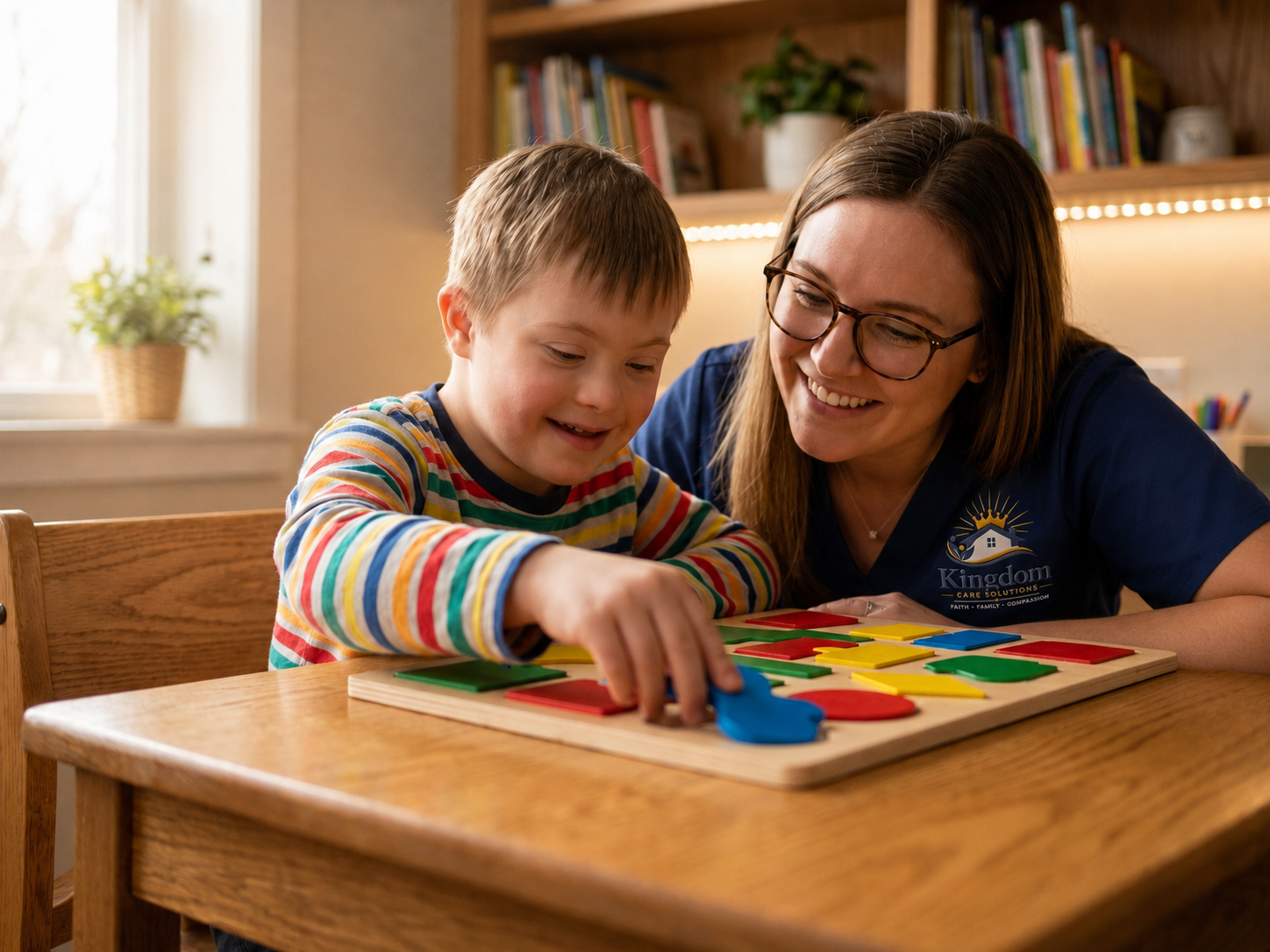

Individualized support
Every person has different strengths, needs, routines, and goals. Kingdom Care begins by listening to the family and learning what matters most at home, in the community, and throughout the person's daily life.
Care is shaped around strengths, preferences, communication, routines, and goals.
Parents, guardians, and caregivers remain informed and involved throughout support.
Clear routines, dependable communication, and coordinated next steps create continuity.
Who we support
Final service eligibility depends on intake, service scope, staffing, funding, authorization, age, location, and assessed support needs.
For people with developmental, intellectual, autism, or related support needs.
For families seeking help with predictable daily routines and transitions.
For individuals practicing everyday communication and daily-living participation.
For families who need respite, supervision, and practical support.
Goals & everyday skills
Supporting functional communication, choices, and daily expectations.
Practicing interaction, shared activities, and family or peer participation.
Supporting routines involving hygiene, meals, organization, and household participation.
Supporting predictable routines, transitions, and approved coping strategies.
Reinforcing supervision needs, boundaries, and safe daily routines.
Helping each person participate confidently in appropriate tasks over time.
What support may include
Explore the practical, non-medical support your family may discuss with our care team.
Support aligned with strengths, schedule, preferences, and daily needs.
Reinforcement of approved communication strategies across everyday routines.
Help with personal routines, meals, organization, mobility, and age-appropriate independence.
Support during family activities, community routines, appointments, or approved outings.
Clear communication with parents, guardians, care coordinators, and approved professionals.
Dependable support that gives family caregivers time for other responsibilities.

Family partnership
Families know the person best. Intake gathers routines, preferences, strengths, communication methods, safety needs, and goals so support remains respectful of household values and priorities.
Where support happens
Availability varies by location, schedule, funding source, staffing, and the individual's support needs.
Support can be arranged in the home when it fits the approved care plan.
Community support is subject to the approved care plan, authorization, staffing, safety review, and service scope.
Support may be coordinated around approved everyday activities and appointments.
Families may discuss respite and supervision needs during intake.
Payment, funding & authorization
Coverage, eligibility, authorization, service limits, and availability vary. Kingdom Care reviews the information provided during intake and explains the next required steps.
Discuss Funding OptionsStaff selection is based on service needs and approved support scope.
Support reflects strengths, routines, goals, communication, and safety needs.
Parents and guardians receive organized updates and clear points of contact.
Important visits, observations, and follow-up needs are documented appropriately.
Every person is supported with patience, privacy, dignity, and care.
How it works
Share the individual's strengths, routines, communication methods, safety needs, schedule, and goals.
Our team reviews service needs, authorization requirements, location, staffing, and the appropriate support approach.
Once requirements are complete, we coordinate the schedule and maintain communication with the family.
Practical short-term relief that helps caregivers rest and manage daily responsibilities.
Learn more →
Support for personal routines, comfort, safety, and daily participation.
Learn more →
Practical in-home support for adults and families navigating recovery.
Learn more →
See the full range of care and support available for Northern Nevada families.
View all services →Let's talk about care
Tell us about your family's routines, priorities, schedule, and support needs. Our team will help explain available services and the next steps.
Not sure which service is appropriate? Start with intake and our team will help guide you.